Why Stendhal
Florence,
22 January 1817.
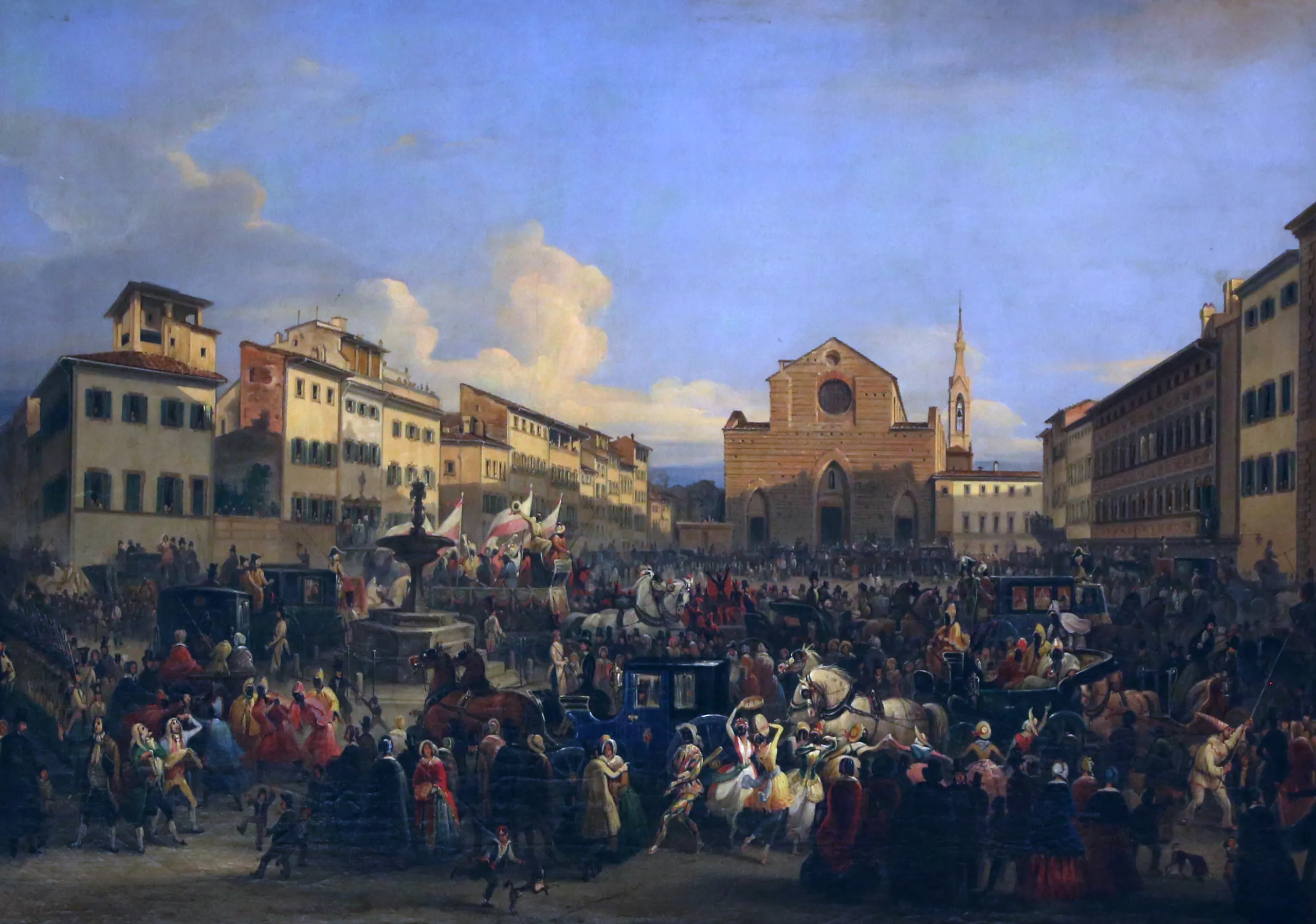
A French writer, Marie-Henri Beyle, who signed his books Stendhal, walked into Santa Croce, the church where Michelangelo and Galileo are buried. In a side chapel he sat on the step of a prie-dieu, laid his head back on the desk, and looked up at the sibyls Volterrano had painted on the ceiling.
They gave him, he wrote, perhaps the keenest pleasure painting had ever given him. Then he walked out into the square.
“On leaving Santa Croce my heart was pounding.
The life had gone out of me.
I walked in fear of falling.”Stendhal, Rome, Naples et Florence. Our translation from the French.
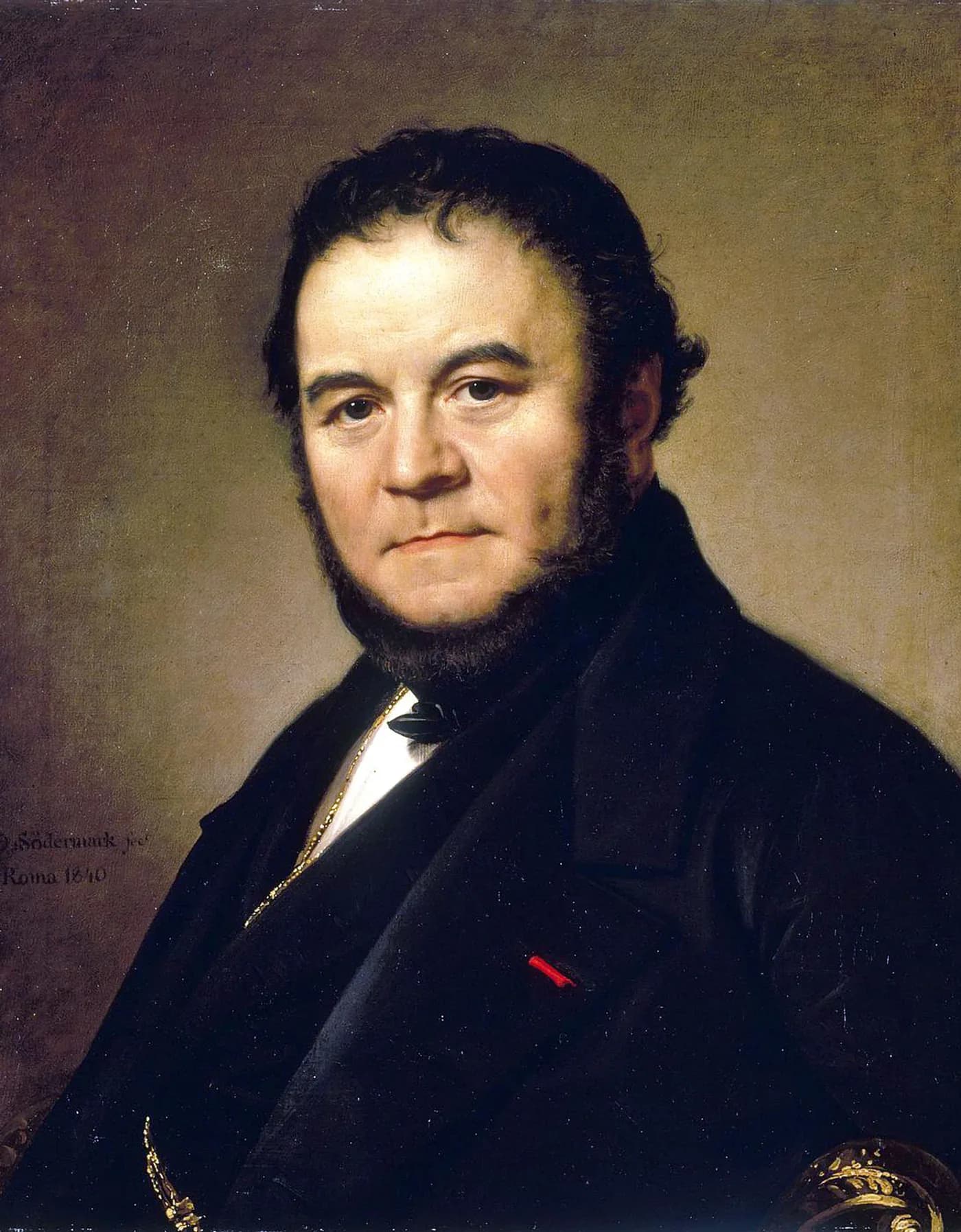
It has his name now.
In Florence, the psychiatrist Graziella Magherini met more than a hundred visitors who had come undone the same way in front of paintings: a racing heart, dizziness, tears. She called it the Stendhal syndrome.
Why the house carries it.
His day in Santa Croce is the test we hold every work to. A painting joins the house only if it does that to both of us.
Overwhelmed by Art.
See what overwhelmed us this month